Why Ethics Became a Business Imperative, Not a Preference
When we first stepped into coffee together, it was not with an ambition to compete on volume or trend. It was with a simple, demanding question, how do you grow without flattening the people and places that make coffee possible. Over time, we have watched that question move from the margins into the centre of serious coffee conversations.
Ethical sourcing is no longer a niche language spoken only at origin. It has become a decision-making framework for cafés, offices, and buyers navigating Colombian coffee wholesale relationships with greater scrutiny and intent. The market is less forgiving of shortcuts now, and rightly so. Values, once invisible, have become measurable.
For us, ethics is not an abstract principle. It is operational. It shapes how we negotiate prices, forecast harvests, and manage risk, because trust is not soft capital, it is stabilising infrastructure.
Colombia as a Living System, Not a Commodity
Colombia is often reduced to tasting notes and elevation charts. Useful, but incomplete. Colombia is a mosaic of microclimates, generational knowledge, and cultural stewardship that resists simplification.
Consistency does not come from control, it comes from alignment. When producers understand how their coffee will be roasted, brewed, and served, quality becomes shared intent rather than enforced compliance. This is where ethics intersects with performance.
Treating origin as a living system has reshaped how we plan. Weather shifts are not disruptions, they are signals. Investment follows dialogue, not speculation.
What “Freshly Roasted” Really Signals in Modern Supply Chains
The term freshly roasted Colombian coffee is frequently used, but rarely interrogated. Freshness is not just about time, it is about coordination across logistics, roasting cadence, and expectations downstream.
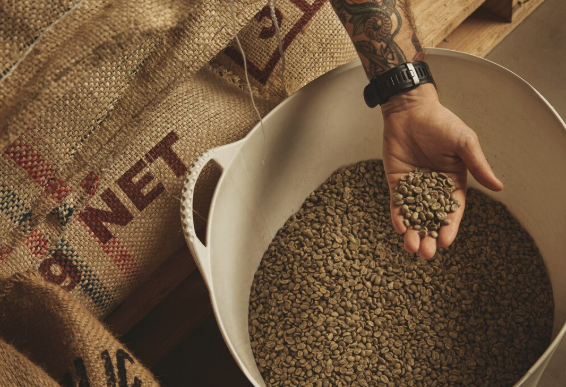
True freshness is the visible result of invisible discipline. Green coffee must arrive with integrity intact, moisture levels stable, and documentation precise. Roasting must reveal character, not overwrite it. When these elements align, freshness becomes clarity.
For wholesale partners, this matters deeply. A cup can only carry an ethical story if it performs consistently. Freshness, treated seriously, is both a sensory and ethical signal.
Reframing Wholesale Coffee for Long-Term Value
Wholesale has long been viewed through the lens of price. That framing misses the real leverage point. The strength of Colombian coffee wholesale relationships lies in predictability, shared standards, and mutual resilience.
We see wholesale as a strategic layer, not a volume channel. Scale introduces risk, but structure reduces it. Clear expectations and disciplined sourcing create space for growth without erosion.
In a market facing labour pressures and shifting consumer values, coffee should stabilise operations, not complicate them.
Technology, Trust, and the Future Palate
Quietly, coffee is becoming more data-informed. Forecasting tools, traceability platforms, and shared quality metrics are reshaping how farms and buyers collaborate.
Used thoughtfully, technology does not replace craft. It protects it. Transparency reduces friction. Shared information reduces misunderstanding. Even the concept of freshness is evolving, as systems anticipate demand instead of reacting to it, reinforcing the integrity of freshly roasted Colombian coffee at scale.
The future of taste will be shaped not only by flavour chemistry, but by accountability.
Scale Without Erosion, A Working Model
Scaling ethically is not about staying small. It is about staying coherent. Growth tests values faster than philosophy ever could.
Ethical scale requires patience, systems, and an unwillingness to trade long-term trust for short-term efficiency. When those conditions are met, impact compounds quietly and sustainably.
Where This Leaves Us
Ethical Colombian coffee is not a positioning exercise. It is a way of working that prioritises clarity over noise and durability over speed.
As the market matures, those who treat origin as responsibility rather than resource will define what comes next. That belief continues to guide our decisions, one relationship at a time.
FAQs
Why does ethical sourcing matter in Colombian coffee wholesale?
Ethical sourcing creates stability across the supply chain, improving consistency, trust, and long-term quality for wholesale partners while supporting producer resilience.
How does freshly roasted Colombian coffee benefit cafés and retailers?
Fresh roasting enhances flavour clarity and shelf performance, allowing cafés to deliver a more reliable experience and tell a credible quality story to customers.
Can ethical practices scale in wholesale environments?
Yes, when supported by clear standards, transparent communication, and long-term planning, ethical models can scale without sacrificing quality or integrity.
What distinguishes Colombian origins in today’s specialty market?
Colombia offers exceptional diversity across regions, combined with a growing infrastructure for traceability and innovation, making it uniquely adaptable to ethical wholesale models.
How does technology support ethical coffee systems?
Technology improves forecasting, traceability, and quality control, helping all stakeholders make better decisions while preserving craftsmanship.
Is ethical coffee more expensive for wholesale buyers?
Not necessarily. While costs may be structured differently, ethical sourcing often reduces volatility and hidden risks, delivering stronger value over time.