
Some coffees surprise you. Others explain themselves slowly.
Honey processed coffees belong to the second category, revealing not just flavour, but the decisions, labour, and restraint behind every cup.
Processing as a Philosophy
For many drinkers, processing is introduced as a flavour descriptor. Natural tastes fruity. Washed tastes clean. Honey sits somewhere in between. That shorthand is convenient, but incomplete.
For us, honey processed coffee represents a philosophy more than a profile. It reflects a decision to slow down, to intervene just enough, and to trust both the fruit and the people handling it. Every honey process begins with restraint. Pulp is removed, but mucilage is deliberately left intact, creating a narrow margin for error that demands attention at every stage.
This is not coffee made for speed.
What “Honey” Really Means in Coffee
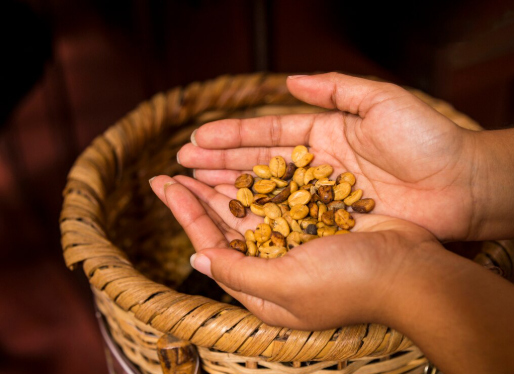
Despite the name, honey processed coffee contains no honey. The term refers to the sticky layer of mucilage left on the bean during drying. That layer feeds microbial activity, which in turn influences sweetness, texture, and aromatic complexity.
What matters is not whether the process is yellow, red, or black honey. What matters is consistency. Drying must be controlled carefully. Weather must be watched daily. Beans must be turned by hand, sometimes for weeks.
In honey processed Colombian coffee, this attention is amplified by terrain and climate that resist uniformity. Slopes vary. Humidity fluctuates. Sun exposure changes hourly. The process succeeds only because people remain present.
Labour, Timing, and the Cost of Precision
Honey processing is labour-intensive by design. It cannot be automated without sacrificing intent. Workers must assess moisture by feel, not just by instrument. Drying schedules adjust daily. Mistakes are expensive.
This labour often falls on individuals who are paid per task, not per hour. A delayed drying window means longer days with no immediate increase in compensation. It is one of the quiet tensions in specialty coffee: higher quality often requires more labour without guaranteed reward.
When we talk about honey processed coffee, we try to honour that reality. Precision has a human cost. Any ethical approach must acknowledge and compensate for the additional effort demanded by this process.
Why Colombian Honey Processing Is Distinct
Colombia’s reputation was built on washed coffees, structured, bright, and consistent. Honey processing emerged here not as a trend, but as a careful evolution.
In many regions, producers began experimenting with honey methods to balance sweetness without losing clarity. The goal was not novelty. It was expression. Colombian terroir offers complexity, and honey processing allows some of that complexity to remain intact.
Honey processed Colombian coffee often shows restraint compared to more aggressive fruit-forward profiles elsewhere. The sweetness is integrated. Acidity remains measured. The cup evolves gradually as it cools, inviting attention rather than demanding it.
Flavour Is a Consequence, Not a Goal
One of the quiet mistakes in modern coffee culture is chasing flavour as an endpoint. In reality, flavour is a consequence of decisions made weeks earlier.
Plant health determines sugar content. Harvest timing influences mucilage quality. Fermentation management shapes microbial activity. Drying technique locks in or erases potential.
When a honey processed coffee tastes balanced, it is rarely because someone aimed for balance. It is because multiple people did their jobs well under imperfect conditions. That is why we resist oversimplifying flavour descriptors. They hide too much of the work.
The Buyer’s Role in Preserving Integrity
Buyers often encounter honey processed coffee after the hardest work has already been done. Still, responsibility remains. Storage conditions matter. Roast development matters. Presentation matters.
When buyers treat honey processed lots as interchangeable, producers are pressured to prioritize speed over care. When buyers ask questions and reward consistency, producers are encouraged to refine rather than rush.
In this way, the final quality of honey processed Colombian coffee is shaped as much by downstream decisions as by origin practices. Integrity is collaborative.
Choosing Complexity Without Excess
There is a temptation to frame honey processing as inherently superior. We disagree. It is simply different. It suits certain lots, certain seasons, and certain producers.
The value lies in choosing complexity deliberately, not automatically. Honey processing should exist because it reveals something meaningful about a coffee, not because it sells more easily.
As coffee continues to evolve, the future likely belongs to approaches that prioritize intention over categorisation. Honey processing will remain relevant not because it is fashionable, but because it respects both material and human limits.
Conclusion: Sweetness With Accountability
Honey processed coffee asks us to pay attention. Not just to flavour, but to timing, labour, and consequence. It reminds us that sweetness often comes from restraint rather than addition.
When we engage with honey processed Colombian coffee thoughtfully, we participate in a system that values patience, care, and transparency. That choice does not need to be loud. It only needs to be consistent.
FAQs
What is honey processed coffee?
It is a processing method where some mucilage is left on the coffee bean during drying, influencing sweetness and texture through controlled fermentation.
How does honey processed Colombian coffee differ from natural coffees?
It typically offers more restraint, with integrated sweetness and balanced acidity rather than overt fruit intensity.
Why is honey processing more labour-intensive?
Because drying requires constant monitoring, manual turning, and adaptive decision-making based on environmental conditions.
Is honey processed coffee more ethical?
It can be, if the additional labour required is acknowledged and fairly compensated throughout the supply chain.
Does honey processing affect consistency?
Yes. It increases risk, which is why experience, transparency, and careful execution are essential.
Will honey processed coffees remain relevant in the future?
Yes, because they reward intentional production rather than trend-driven experimentation.